
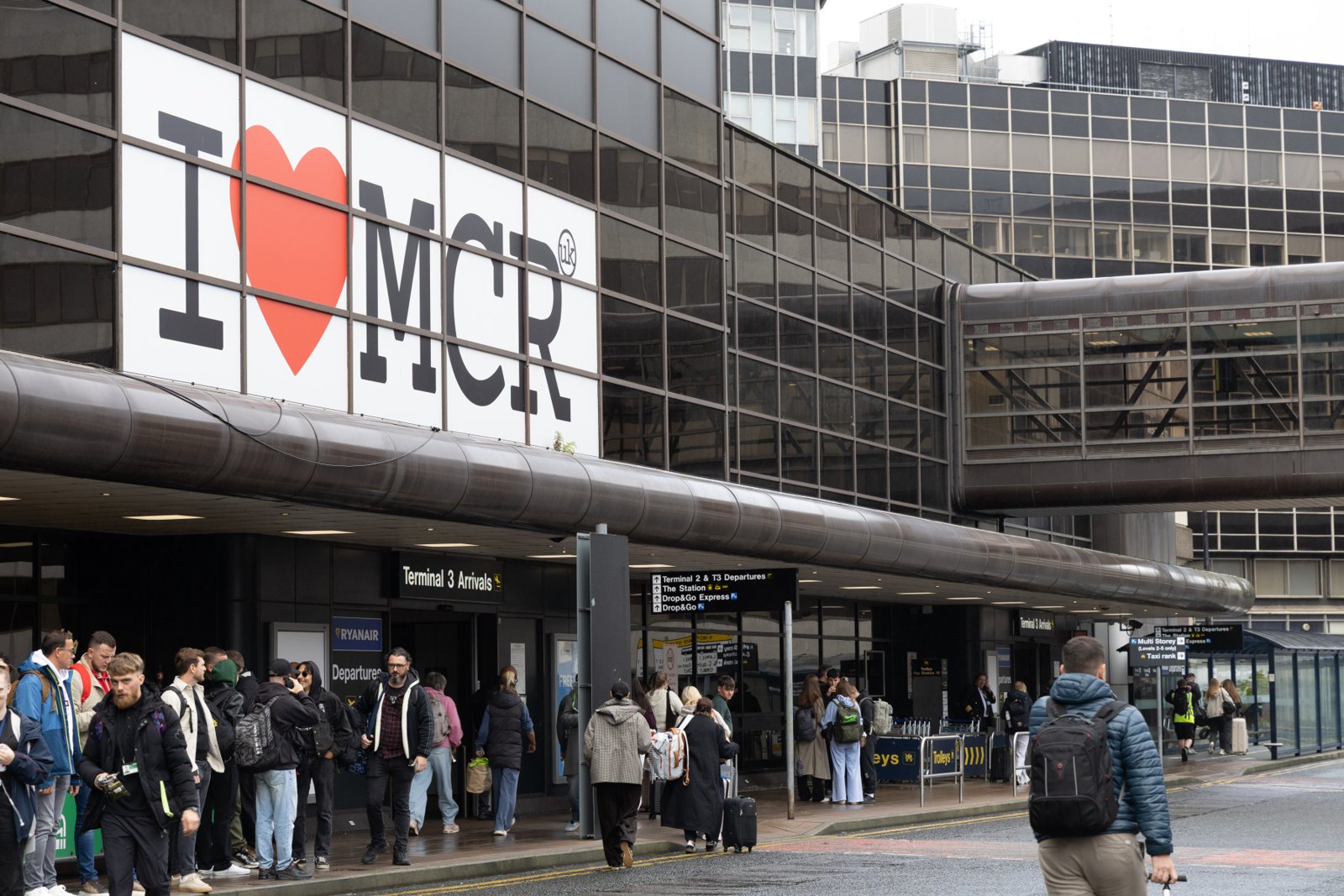
A project to make the departure lounge in Manchester Airport’s Terminal 3 more than a third bigger, adding about 2,000 square metres of floorspace, has been given the green light, the airport said on 23 October 2026.
The multimillion-pound scheme will give passengers more space, seating and natural light and create room for a range of new shops. The airport said the work will be complete in 2028.
The extra space was once part of the landside operation in Terminal 3 and has been out of use, according to the airport. One of the next steps is a competitive tender to bring new retailers into the added space, with details of the process to be announced in the coming weeks.
Food and drink
The expansion follows earlier changes to the terminal, which now serves only the airport’s Ryanair passengers, including the opening of the Sporting Chance bar and a new entrance and security area. A new Italian restaurant, Terracotta, is also due to open in the terminal.
Terminals 1 and 3 are joined, and parts of Terminal 1, including its security hall and entrance, have been brought into Terminal 3.
Chris Woodroofe, managing director of Manchester Airport, said: “We’ve already made significant changes but now we’re ready to accelerate that work and provide more space and facilities for our Ryanair passengers.”
Over the last decade the airport has invested around £1.5bn in the full redevelopment of Terminal 2, which now handles around 75% of its passengers and allowed the old Terminal 1 to close.
More on Greater Manchester’s shops, bars and restaurants is in our hospitality section. Woodroofe has also been named co-chair of the Manchester India Partnership, which supported the city region’s trade mission to India.